EVENT ABSTRACTS

Background: Acute kidney injury (AKI) has been an ongoing issue in cardiac surgery for many years. Numerous attempts have been made to ameliorate this issue with various renoprotective drugs and techniques however none have been entirely successful. New research has linked AKI with red blood cell breakdown (haemolysis) and subsequent release of intracellular, highly bioreactive, iron containing molecules which damage cells and tissue. CPB is responsible for breakdown of cells and indiscriminate distribution of intracellular content around patients.
Aim: Test a prototype clinical device which will be incorporated into the CPB, to improve safety for patients by removing the damaging, highly bio-reactive, red blood cell iron-based components (Haem, Haemoglobin, Free Iron) prophylactically before they can be distributed around the body and cause downstream cellular, biological system and organ damage. The device has capture ligands to specifically target those molecules.
Methods: Porcine model of cardiac surgery–associated acute kidney injury was established. Animals were subject to clinically relevant haemolysis with filtration (test) or without filtration (control). Blood, urine, and terminal tissue samples were collected over a 5-hour follow-up period. Blood and urine underwent biochemical assays, while kidney tissue underwent histology (H&E) and RNA sequencing.
Results: Filtered groups has lower levels of plasma cell-free haemoglobin and haem and AKI Biomarkers. Coagulation measures (Tat and D-dimer) showed no adverse effects from filtration. Histological examination demonstrated clearer lumen structures and reduced epithelial vacuolization in filtered kidneys. RNA sequencing of terminal kidney samples demonstrated reduction in inflammatory pathways.
Conclusion: The filter is effective at removing harmful haemolysis byproducts, with no additional risk of clotting. The laboratory analysis shows positive effect on reducing kidney injury in test animals. Histological findings in kidney tissues suggest clinical benefits, RNA sequencing highlights biological systems which may be negatively impacted by haemolysis byproducts.
Acknowledgements: Thank you to British Heart Foundation, National Heart Lung Institute, Manchester Perfusion Practice and Wythenshawe Hospital, Manchester for the support and funding.
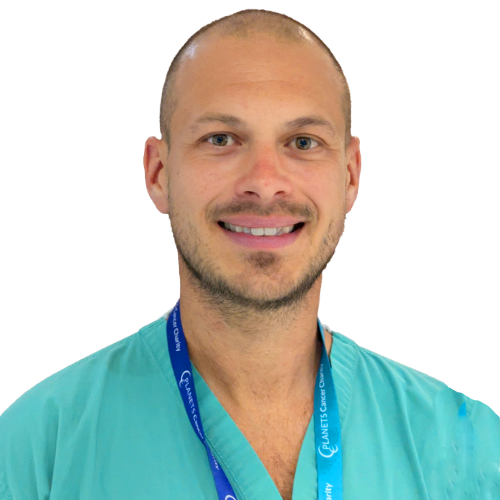
Karl is a part-time Perfusionist at Wythenshawe hospital for Manchester Perfusion Practice. He is a PhD fellow at Imperial College with a British Heart Foundation fellowship for Allied Healthcare Professionals. His research is part of a collaboration between Imperial College London and UCL focused on developing a new medical device to reduce the risk of acute kidney injury (AKI). The device is designed to remove iron-containing by-products released during surgery that can damage organs and increase the risk of long-term complications. By removing these harmful substances before they enter the patient’s circulation, the team hopes to prevent injury at the source.